Showing posts with label vegetarian. Show all posts

Wednesday, July 14, 2010

Stuffed Squash

Earlier than anticipated, I’m already giving away produce.

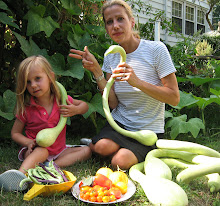
One eight-ball zucchini plant produced her first little squash well over two weeks ago and the rest of them, obviously jealous, have been pumping them out to keep up. I had forgotten how productive summer squash can be once you pick the first fruit. The pale, tender green variety has been the most productive, but the sunny yellow and dark green types are catching up.

Either way, those sweet little orbs have made their way to friends and family. In our household, they’ve been cut into sticks to dip in hummus, halved and grilled, sliced and steamed, and as of last night, stuffed.

I first prepared cous cous then blended in Greek gigante beans in a light tomato base with a touch of garlic. I cut the stem tops off the squashes, hollowed out the inside, the slicked them (inside & out) with a little olive oil, garlic, salt and pepper. I quickly grilled them to blister the outsides and lightly sweeten the flavor while keeping the squash still firm. Once removed from the grill, I spooned in the cous cous mixture, topped them all with a final crunch of sea salt and a drizzle of olive oil, then served them with roasted red and yellow peppers fresh from the grill, which my husband chopped roughly and used as a garnish.

Squash aside, we’ve also harvested two pounds of wax beans and easily two pounds of Kirby cucumbers. Those barely make it to the table or into salads, as they’re just so crisp and delicious eaten whole while sitting on the patio, straight off the vine.

2 lbs wax beans @ $1.29 / $2.58
2 lbs cukes @ $.99 / $1.98
Conservatively, 5 lbs zucchini @ $.99 / $4.95
Many Salads of green & red looseleaf lettuce $2
Harvested: $11.51
Offsetting last “in the red” total of $23.37:
Still in the red by $11.86, but quickly closing the gap.

Tuesday, June 22, 2010

Grilled Butternut Squash

Sunday may have been Father’s Day, but the evening was a veritable celebration of Mother Earth.

I served a fresh-picked salad, added a flurry of basil over the main chicken dish and a chiffonade of sage over the sides, and presented a rhubarb pie sprinkled with fresh black raspberries for dessert - all of which came from the backyard.

Plus, I used the last of my butternut squash that was harvested last fall. Which is good, because I have eight Waltham Butternut Squash plants growing like gangbusters in my middle bed.

I couldn’t believe how well the squash was preserved after all this time. Once cut open, it was sweetly glistening and still as orange as I remembered that the first-picked were.

I wanted to go beyond the wintry preparations and pureés of squash that we’re all used to, so I thought of a classic combination to vary: butternut squash, sage and shaved parmesan cheese. I cut the two large squashes lengthwise, then spritzed some cooking spray on the outer skin sides. I then rubbed a blend of olive oil, garlic, sea salt, pepper and a touch of white wine vinegar to the flesh. I topped it all with the sage I’d picked while gathering basil leaves and salad greens.

I preheated the grill to about 400 degrees – a good roasting temperature – then placed the squash on, flesh side up, and closed the top so the grill would act as an oven. I turned them over after 15 minutes, when the sage had frizzled a bit and the garlic and olive oil had sizzled their way into flavoring the flesh of the squash.

Two rotations later (got to get those grill marks!) I removed them and immediately re-seasoned with a little salt and pepper, then the parmesan.

The skin was delicate and papery, but nutty and earthy, completely crumbly and edible. The flesh was soft and tasty even after a full period of winter and spring storage. In a way, I was sad to see the last of my squash go, but am really looking forward to this year’s harvest.

Tuesday, February 23, 2010

Tofu Stir Fry

When I came up with this meatless Lent venture, I mentally vowed not to depend on soy protein.

I worry about the isoflavones that mimic estrogen in women and don’t want my five-year-old daughter developing at age six. Seriously. When my mother was diagnosed with ovarian cancer in 2004, the first thing her doctor asked her was, “Do you eat a lot of soy?” The answer was “No, not any, really.” [Mom made it through fine.] One of my daughter’s and husband’s favorite snacks is edamame, in or out of the pod. Toasted, salted soy nuts are another favorite for both, although I don’t buy them very often. She asks for edamame constantly, so I monitor soy intake – hers and mine.

At any rate, when I came across a huge bin of fresh snow peas at the farmer’s market this Sunday, at just 99-cents/pound, I knew exactly what I’d be making. I ended up purchasing about two pounds – which you may or may not realize is a huge bagful. A small mountain of snow peas makes up a single pound. But they are so crisp and refreshing and taste just like Spring to me. Eaten plain or dipped in homemade hummus, the household has already gone through half of the remaining snow peas.

The white pillows of tofu, which Mike loves, were fresh at the market as well. I changed the water at home that day, then on Monday morning before using it that night.

As for the stir-fry, you can’t go wrong with a ginger-garlic-soy sauce treatment cooked in a slick of sesame oil. I also blend those four ingredients along with rice wine vinegar for an in-pod edamame dip. I cooked some chicken for my daughter, which she blended into the stir-fry. She cleaned her plate, emptied her rice bowl, but was not crazy about the tofu. She picked it out and left it on the side. Whew.

Wednesday, February 17, 2010

Ash Wednesday, Red Lentils

So it begins.

I served our first meatless meal of Lent and the family has survived.

I made a red lentil dal that I adapted from a Mark Bittman recipe in a recent edition of The New York Times. The actual recipe is below. I served it with white rice, a green vegetable, small salad and onion nan spread with garlic confit. My daughter kept all components separate, Mike put the dal over his rice, and I tried it both ways.

Considering all the snow we’ve had in the past ten days, the hearty bowl of steaming dal was a soothing and warming choice.

For now, it looks like fish on Friday.

Spiced Red Lentil Dal
The New York Times, January 6, 2010

2 tablespoons peanut oil
1 large onion, chopped
1 cup dried red lentils, washed and picked over
2 tablespoons minced fresh ginger
1 tablespoon minced garlic
1 tablespoon mustard seeds
2 cloves
1 teaspoon cracked black pepper
Salt
2 tablespoons cold butter (optional)
Chopped fresh cilantro leaves for garnish.


1. Put oil in a skillet over medium high heat; when it is hot, add onion and cook until soft, about 10 minutes; set aside.
2. Meanwhile, combine all remaining ingredients except the salt, butter and cilantro in a saucepan. Add water to cover by about 1 inch, and bring to a boil. Adjust heat so mixture bubbles gently, and cook, stirring occasionally and adding water if necessary, until lentils are tender, 15 to 20 minutes. Sprinkle with salt and more pepper and keep cooking to desired tenderness. Lentils should be saucy but not soupy.
3. Remove cloves from pan and add reserved sautéed onion. Stir in butter if you are using it. Taste and adjust seasoning, then garnish with cilantro and serve.


** Note: If you know how to develop flavors, you won’t follow this recipe to a T. Sauté your ginger and garlic in desired quantities, add lentils and coat, then liquid to deglaze. I respect Mark Bittman to some extent, but never fully follow his recipes. Vegetable oil is fine. And nix the cilantro, unless you're into it.

Monday, February 8, 2010

Lentils

First in the arsenal for Lent: Lentils.

Alliteration aside, lentils are chock full of protein, plus fiber and complex carbohydrates, and have been a part of the human diet since Neolithic times. They remain an important source of nutrition around the world. My father-in-law always said, “I love a woman who can cook lentils.” Over the years, as Mike and I have been together for 17 and married for 11 this year, I’ve come to learn what that means. To George, it’s his mother. She made lentil soup every Friday during Lent. Keep in mind that she had four children, plus a husband to feed, and extended family in Depression-era Pittsburgh. Everyone worked in the mills, sometimes just alternate weeks. Lentils are a poor man’s protein. I’m always honored to serve them to George, in any form.

Now, you know I always have French green Puy lentils on hand, year round, for warm dishes in winter and salads in the summer. They hold their shape and are infinitely useful (and delicious). I haven’t needed to bolster my supplies of those. The last time I hit Whole Foods, I purchased quite a quantity from the bulk foods section. I go there only a few times a year, mainly for grains and the like. I am the only person I know who can get out of there for under $20 and still have a full bag of groceries, including an esoteric cheese that might strike my fancy.

Next, I laid in supplies of brown lentils. You know the ones: a one-pound bag of little gray-green discs. Fortunately, my supermarket ran a special last week on Jack Rabbit lentils, my usual brand: 77-cents per bag, limit four. Yes, I bought four packages. They are a household staple, with lentil soup being a default lunch item for the week, made on a Sunday afternoon, or at night after the dishes are done. My five-year-old daughter has been helping me make lentil soup since she could toddle up to the kitchen counter while pushing a chair to stand on. If only her knife skills were at the adult stage – I’m honestly sure she could do it with her eyes closed at this point. My best friend adds ribbons of chopped spinach to hers, an Italian touch – and delicious. I can't believe I hadn’t thought of that. For other dishes, watch your cooking time. They can turn to mush easily. Make a pilaf with equal (or 2:1) parts white rice and lentils. Or toss them simply with a little red wine vinegar, garlic, S, P and Italian parsley.

Third, red lentils. They’re tiny, little things that don’t really hold their shape, but they can make a great Indian dal (warm, hearty), or be stewed with a cumin-cilantro-lime treatment then served over rice. The last time I used red lentils, they accompanied this sort of Cubano-pork dinner that I winged, geez, just too long ago. They were really good, to my recollection. I don’t always keep these on hand, but thought perhaps I should. I picked up a bag of Goya brand along with the Jack Rabbits, for good measure.

Finally, black Beluga lentils. I had completely forgotten about these! Over the weekend, I was at the Fairway that opened recently in our county, going in for one thing and coming out with much more. These shiny little black pearls jumped off the shelf and into my hand basket, seemingly out of nowhere. They weren’t on my list. They were tucked away near some organic chard and turnips (which were not on my list, nor did I buy them) – I was merely trying to find a clear path around and away from a crowd mobbing the bakery samples. It’s a great store, but it’s impossible to just zip in and zip out, much less stick to your list.

At any rate, they’re added to the lentil larder. They also reminded me of a curried black lentil soup that I make, which I haven’t served since I can remember. It is delicious and hearty – and will be one of the first meatless meals I make, guaranteed.

Try it – but start it in the morning:

One onion, diced
A good knob of ginger, peeled and minced
2 cloves of garlic, minced
2 tsp. curry powder
1 tsp. garam masala
1 tsp. cumin
salt & pepper
1 cup black lentils (1 ½ if you like it really thick)
4to 6 cups water and/or chicken broth combined
1 small chili pepper, chopped, if desired
A few tsps oil for your pot

Heat the oil and add the onion and ginger, cooking until soft, golden and fragrant. Add the garlic and the chili pepper if using. Stir and soften. Add the dried spices, salt and some pepper. Keep stirring; it gets a little sticky.

Add the lentils. Toss to coat. Add the broth and/or water. Deglaze and scrape up all the good bits. Cover and bring to a simmer for 2 hours. Black lentils really take their time. Check, taste, adjust seasonings. There are times you want more curry flavor – now is the time to be bold. Cook for at least ½ hour more, depending on the doneness of the lentils.

Tuesday, February 2, 2010

Meatless Meals

I’m giving up meat for Lent.

I’ve done that once before, but with less than perfect results. A few years ago, I realized that I was eating an inordinate amount of meat. It wasn’t on purpose, but it just grew into a habit. Every time I made a sandwich for my husband, Mike, I’d have a few slices of turkey, ham or whatever I was using. I would give my daughter a ham roll as part of a snack, and I’d end up eating two, three or more, loathe as I am to admit it. My default nibble at night seemed to always come out of the deli drawer of the fridge, or sliced off a leftover dinner roast, and a single slice or chunk of chicken would never do.

So I quit, cold turkey.

However, I didn’t “do it” right. After about two weeks, I found myself wandering aimlessly in the beef department of the supermarket – and I never buy beef – in a fugue state: I didn’t know how I got there or what I was doing, but I could not feel my arms, legs or head, much less stagger out of there and into the checkout line. I was starving and seeing double, standing still, staring at the blood-soaked packages, not even knowing how much time had elapsed. I ate meat two days later, lapsed Catholic that I am. That, and I gulped down a massive quantity of iron supplements.

But I want to try it again this year and announced as much last week, after scoring a ton of sardines in various sauces that were on sale at the supermarket.

Well, after a stellar dinner of a gorgeous filet of wild Sockeye salmon last night, served with sweet vinegared rice, edamame and salad, Mike proclaimed he wanted to give up meat for Lent as well. “Let’s all give up meat this year!” He was really into it.

“I can’t do that with her,” I told Mike, motioning my head toward our 5-year-old daughter, who was scraping up the last flakes of fish from her plate, then negotiating the skin.

She knows where meat comes from, and last night she asked why we had to kill the fish. She often asks why the chicken died. I tell her “We make our choices,” and don’t have to eat it. She will agree, then think, then completely renege and say she wants the meat, then repeats and repeats that she wants the meat, psyching herself up for dinner. And that’s fine. I wouldn’t expect anything different. I’m glad she’s a good eater.

I further explained to Mike that I don’t really know the bean-rice-lentil combinations and quantities to create that elusive “complete protein” I always hear vegetarians talk about. I don’t eat pasta, but they do, so maybe this could work. I then recalled to him the fugue state I entered each time I went to the store starving and practically cross-eyed three years ago.

“I have confidence in you. We can do it,” he said [i.e. I can do it, prepare the food in balance, and keep the Lenten promise going …]

Maybe we can. We go meatless probably more often than most American families, with an ever-evolving repertoire of grains, beans and any invented combination thereof. It’s definitely easier in the summer, when our garden produces all the produce we need to feed the neighborhood.

I’ve also had my run-ins with supermarket meat. And until a lapse last year for which I received 113 lashes, I hadn’t purchased industrial beef since I can remember.

But I obviously purchase meat and fish. I like it to an extent, and my daughter, since starting solid food, almost always eats her meat first. She (and I) also love organ meats, from hearts to livers. Although I exceed her age by a high 30+ [ahem] years, she’ll out consume me, hands down, when it comes to the innards. I will be preparing protein in various forms for her during the Lenten season. I’ll enjoy making a little something special and different for her, and she’ll feel like a big deal.

In the end, Mike also pulled back a bit, requesting only meatless dinners. The lunches I make for him to take to work usually involve a turkey, ham or other type of sandwich [Italian hero is a favorite, loaded with Coppa], although not always.

But for now, I need to do more than lay in extra supplies of tinned fish for myself: research, recipes, shopping (I’m out of both polenta and wheat berries) and planning are on the menu before Ash Wednesday arrives on the 17th. Fresh fish is costly, and I can’t shoulder that as a nightly expense.

I also hope this will bring a new spark of creativity to my kitchen. I’ll keep you posted.

Friday, August 14, 2009

Pasta with Spinach and White Beans

I harvested not a bale but a bushel of chard last week.

We’re a little charded-out at this point. I love it, simply steamed or sautéed. It reminds me of eating spinach, with oxalic acid and iron coating your teeth and minerals & nutrients coursing through your veins. All right, so that doesn’t exactly sound like a selling point to most, and it’s also why few members of my family will take any chard off my hands. I never realized I would have so much for the entire growing season, so I’ve had to be creative. I think I hit it this time, though: swap my chard in mass quantities for the spinach in pasta with spinach and white beans.

I’ve mentioned this dish before – a standby favorite in the household, for which I always have all the ingredients on hand. Mike likes penne, orecchiette or a similar shape (don’t use spaghetti or the like), with more vegetable base than pasta.

This time, I used some pillowy gnocchi instead of a pasta shape and went pretty heavy on the vegetable (for obvious reasons), including the colorful stems. He loved it, heaped into a bowl and topped with fresh grated Romano cheese. I also passed some along to my father when I stopped by for a visit– he devoured half on the spot (cold!) then heated the remainder for lunch the next day. Why hadn’t I thought of this trading tactic before?

Next treatment: Swap it for the broccoli rabe in a classic prep with sweet sausage. I’ll let you know how it turns out.

Pasta with Spinach and White Beans

2 block pkgs frozen chopped spinach, thawed and squeezed a bit (keep some juice) or your choice of fresh greens, chopped; at least 8 cups (it cooks down to nothing)
half a sweet onion, diced
two large cloves garlic, minced
1 15 oz. or 19 oz. can of cannellini beans, drained and well rinsed
1 T. flour
4 T. good olive oil
S & P ; pinch of red pepper flakes (optional)
¼ C. white wine
¼ C. chicken broth
¼ C. chopped fresh Italian parsley
1 T. chopped capers (optional)
Wedge of Lemon

½ Lb. pasta, your choice of shape

Over medium heat, heat the olive oil with red pepper flakes (if using) in a wide sauté pan fitted with a lid. Sweat the onion until soft and golden. Add the garlic and sauté a minute longer. Sprinkle the flour and sauté until well-integrated and lightly golden, about 2 minutes.


Add the beans, a very generous amount of black pepper, stir to coat. Add your wine and broth, stir and scrape; it will thicken. Add your spinach and salt. Stir to integrate. Lower your flame to low and cover with lid. Allow to cook together for at least 5 minutes. **Note: That time is for frozen spinach and for a normal quantity of fresh. I had a LOT of fresh greens. It went in in two batches until it all cooked down, taking longer than 5 mins.

Add your parsley and capers, if using, blend all together and toss in your pasta, adding pasta water if necessary. Finish with the juice of your lemon wedge, a glistening drizzle of olive oil (if desired) & serve.

Tuesday, August 11, 2009

Summer on a Plate

The day has finally come: TOMATOES.

Awaiting extra sun and extra heat, my tomato plants have been falling over in recent weeks, weighed down by volumes of unripe fruit, soaked by heavy rains yet, to my regret, holding steady in their greenness due to cool nights and cloudy days. Staked or caged, most every one has required reinforcement. But yesterday, I relieved my heaving Mortgage Lifter plant by picking two violet-red near-2-lb tomatoes. She thanked me somewhat for the relief, and I hope I did her fruit justice.

Cut in half then sliced into wedges, alternating with two lemon cucumbers cut in the same fashion, the slices were arranged in a pattern around the rim of a large, 14-inch round pressed glass plate, atop a bed of shredded romaine lettuce. In the center, I heaped a half-pint of SunGold cherry tomatoes, sprinkled a good bit of finely diced Vidalia onion throughout, then topped the entire dish with a blizzard of basil in a chiffonade. A mild red vinaigrette made with the greenest, grassiest olive oil I have, drizzled atop, finished the dish.

It was beautiful, crisp, refreshing in this sudden onset of 94-degree heat and, most important, delicious. How could it not be? Nearly every element went from the earth to the table in a matter of minutes. I couldn’t believe it, but just one Mortgage Lifter tomato filled the entire rim.

I can’t wait to pick more.

Tuesday, August 4, 2009

In Praise of White Beans

When I posted last night, I planned on linking to my entry on cannellini beans when referring to white bean hummus. I scoured this site and no, I hadn’t written it! I still can’t believe it, since white beans are a family favorite and a standard pantry item in my household throughout the year. I become seriously alarmed if I don’t have at least a can on hand. You can’t go wrong with them, either: They’re good for fiber, 7g protein, complex carbohydrates and 10% iron per serving, and they can be used in infinite ways.

Well-rinsed and eaten straight, they’ve been one of my daughter’s favorite snacks since she started on solid food at 6-months (seriously). They’re easy to sprinkle over a salad for extra taste, texture, bite and bulk, or to add to many other dishes for the same reasons. Toss some into your next batch of summer bruschetta and you’ll see. Pasta with spinach and white beans is a default dinner item for my husband at any time when I don’t have anything thawed or planned – as are a half-dozen other meatless pasta dishes I’ve come up with using the white beans and other pantry and fridge items. White beans with a drizzle of very good olive oil, lemon and fresh chopped basil is an easy, 30-second addition to summer tapas, eaten straight or spooned onto crusty bread brushed with garlicky olive oil or garlic confit. I’ll use fresh thyme for a more autumnal flavor come September. Another tapa: warm, blistered roasted sweet peppers from the grill or oven, chopped, drizzled in garlic oil and blended with the beans. I could go on: the variations and uses are endless.

Canned vs. Dried: Canned beans are quick and easy. To be honest, my store brand cannelini beans in cans hold their shape the best, even cooked. Progresso brand is very good, too, but comes only in 19 oz. cans. I stock up on them whenever they’re on sale. I’ve never had luck with Goya (sometimes good, often pasty; inconsistent, which is surprising), Luigi Vitelli (no shape or tooth, just paste) or Colonna (ditto). Sorry to all of the above; hey, I have my housewife favorites, but you all know that by now.

You could also soak a 1 lb. bag of dried beans, which cost about the same as one large Progresso can, but will yield beans until kingdom come. It’s extremely economical, and you could do half the bag if desired. Plus, the remaining dry beans will keep until kingdom come. I tend to do this during the winter, when nothing warms you like a good bowl of Pasta e Fagiole soup. By the end of the week, I’ll make warm white beans with the rest, if they haven’t been used on salads or in other dishes. For a soup, braise or other heated recipe or dish, the dried beans hold their shape and tooth better than canned.

But, so far as summer goes and a starter on white beans, try this:

White Bean Hummus

One can, 14 oz or 19 oz, white Cannelini Beans, drained and rinsed
¼ cup good olive oil
One large clove garlic, chopped
¼ Lemon in a wedge for juicing
¼ cup loosely packed Italian parsley leaves
½ tsp sea salt, or to taste
pepper to taste

Equipment: Food processor or mini-chopper
Total time: under 10 minutes.

Place rinsed beans in food processor. Set aside.
Warm olive oil and garlic low and slow on the stovetop or in the microwave until garlic is soft and oil is very fragrant.
Drizzle over beans into food processor while running.
Squeeze lemon juice into mixture and process until smooth, or to desired consistency.
Add salt, pepper to taste and parsley, process to blend.
Serve in a bowl and lightly drizzle with extra olive oil as garnish.
Serve with vegetables, warmed flat bread, pita, toast, breadsticks, other.

Variations:
Extra lemon makes for a more tangy, hummus-y flavor.

Add a sprig of fresh rosemary to the olive oil and garlic while heating. Remove before processing, then rest sprig on top of finished dip for garnish. This is great on toasted Italian bread rubbed with garlic or as a sandwich spread.

When in season, replace the parsley with a generous amount of fresh basil leaves. Garnish with whole or finely cut basil leaves. This also is great on toasted Italian bread rubbed with garlic or as a sandwich spread.

Add a sprig or two of fresh thyme to the olive oil and garlic while heating. Remove before processing. Garnish with fresh chopped thyme leaves. Use Gala or other crisp, tart apples for dipping. Or, spoon onto a dinner plate and top with a grilled skinless boneless chicken breast, sliced.

Add a pinch of hot red pepper flakes to the olive oil and garlic while heating for some zing.

Or invent your own version!

Friday, February 27, 2009

Grains I


Dinner in question, if you will? When in doubt, consult the sill.

The windowsill, that is.

I love grains, lentils and similar dry goods bought pre-bagged or in bulk. They’re cheap, they keep, they’re healthful and their possibilities are seemingly endless throughout the year. Need a side dish? You could eeny-meeny-miney-mo my windowsill for something new every time. Looking for a side salad? Put on your blindfold and reach into the overflow bag-o-beans and grains in the pantry.

In the winter, a warm pilaf of barley and rice, or rice with lentils, or, as below, lentils and barley is warm, hearty, healthy and delicious hot or at room temperature the next day for lunch. During the summer, a salad of fresh-picked vegetables and handfuls of herbs from the garden tossed with couscous or steamed buckwheat with a touch of lemon juice can be assembled in no time with incomparable freshness and flavor.

My standard windowsill set from left to right: long grain rice, polenta, French green lentils, barley, Arborio rice. In the summer, the far left empty jar is filled with fine couscous and the Arborio rice is replaced with wheat berries.

Also included in the grain larder (i.e. a big ZipLoc bag on the lower right shelf of a cabinet): farro, buckwheat groats, brown lentils, red lentils, split peas, all manner of dried beans, plus overflow for the windowsill jars and likely a few that I'm forgetting, or will find as a surprise whilst digging.

The other night, I put the French lentils to good use with an idea I’d had during the week to stretch the leftovers from a large roasted chicken. The meat was more like a garnish, which was my intent.

1 C French lentils du Puy
½ C pearled barley
1 C chicken stock
½ C water, or as needed
2 shallots, halved and thinly sliced
1 clove garlic, smashed but in tact
Thyme sprig(s)
2 good-sized potatoes of your choice, peeled and cut into a ½ to ¾ inch dice.

Sweat the shallots low & slow until they are very soft, golden and very sweet in butter, canola oil or a blend of both, with thyme and garlic added midway. Add lentils to pan, stir to coat. Add barley, stir to coat. Add S&P. Deglaze with a good splash of sherry (I used Amontillado). Once sherry evaporates, stir in stock and water. Bring to a bare simmer. Cover & cook for about 20 minutes, checking occasionally for dryness. Add water if needed, and re-cover.

Meanwhile, heat your choice of lubrication in a sauté pan. **Note: I had bacon fat in a small sauté pan left over from the morning and used that. I saved the drippings specifically to use in this dish. I recommend it here.** Toss in potatoes and brown on all sides. Salt generously to taste when they are cooked through.

Retrieve garlic clove and thyme sprig(s) from the lentil-barley mixture. Gently fold the potatoes through the pilaf to combine. Garnish with fresh chopped Italian parsley. S&P to taste. Stir to combine. If desired, slice and fan chicken over the lentils and sprinkle the meat with a good Sherry vinegar. Serve with salad and crusty bread with warm garlic confit. Serve same for lunch the next day [shown left, as taken to work], refreshing the parsley and vinegar, if desired.

Tuesday, January 20, 2009

Something to Warm You to the Core

I made an appetizer last night for a dinner we attended that would warm you to the core. A necessary action, considering the amount of snow we’ve had this month. I came across the recipe for “Braised Cannellini Beans with Garlic, Marjoram and Oregano” on page 31 of this month’s Gourmet, and it reminded me completely of a bean dish that I make with fresh rosemary. I had everything I needed on hand, including some additional items to serve with it.

Actually, the recipe was pretty much the same thing I make except that it called for fresh marjoram and dried oregano. Now, I’m not a dried oregano person – fresh is good, dry is bitter and harsh to me. But I did it "The Gourmet Way" using two 15-oz cans of Cannellini beans, about ¼ cup of their liquid and chicken stock to make up the difference in liquid called for in the recipe. I even went out to the two spots in my backyard where my herbs grow to obtain the marjoram. I had to try both spots, because upon clearing the snow in the first area where the bigger specimens grow, I was reminded that, “Oh, yeah … we’ve had two sleet and ice storms recently.” I couldn’t scratch or scrape through the layers of ice barehanded. Believe me, I tried. Squirrels perched atop the side fence cackled at me. And yes, I went out without a hat, coat or gloves because A) I thought it would be a fast trip, and B) I was just plain excited at the prospect of even just a little greenery picked fresh from the garden. Fortunately, the second, more sheltered spot yielded the little leaves I needed.

The results were herbaceous and subtle, comforting and soothing. I liked it more, at least in a different way, than my rosemary beans, which if not watched and tested can become piney. I served the warm beans over thinly sliced, toasted Italian bread brushed with garlic olive oil. I also put a trio of condiments on the side: thinly sliced plum tomatoes and/or roasted red peppers to place on the toasts before the beans, and shavings of Romano cheese to top the beans. Any combination thereof worked well. It all went, right down to the last shard of Romano. And I would make it again.

Wednesday, January 14, 2009

On Potatoes.


That $1.29 5-lb bag of Eastern White potatoes got me thinking about potatoes in general. Over the past few years, I seem to have become a potato person. I never thought this would happen.

True, potatoes can be a cheap and dependable carbohydrate for meals, but that’s no reason to simply consume them. They store well and keep, vary in taste, size, color, and texture and are infinitely useful. The Incans cultivated many hundreds of varieties adapted to both varied sun conditions and terrains, up and down the sides of the Andes. But I never really ate potatoes before. Maybe it was the “fattening” [untrue] rep they had? My grandmother ate potatoes with dinner every single day of her life and lived to 92. Maybe a nascent gene from the Polish side of my family is surfacing? Either way, I’m a convert now.

However, Eastern Whites are not usually my first choice for potatoes. But at less than 26-cents per pound, I was not passing up that bag. In fact, I went back at the end of the week for a second bag (there was a limit of one per store visit.) At that price and with that quantity on hand, I didn’t feel so guilty about the waste incurred while I practiced “turning” potatoes for Pommes Fondant [potatoes sautéed in duck fat w/thyme.] Really? You have no duck fat stored in your freezer? You should. I certainly hope you didn’t waste any of that rendered liquid gold left over the last time you roasted ducks for a party of 12 … but I digress.

These Eastern Whites are fairly basic spuds. They could have been any of a number of varieties. The bag listed Maine as their place of origin, so they were probably MaineStays: a high yield, late maturing type with white skin and white flesh. I chunkily cubed two huge ones last night and dropped them into a pot of vegetable soup. I steamed a number of small ones and tossed them with butter, salt and parsley as a side dish with broiled bone-in chicken. They were OK, serviceable. I would not roast them; the moisture content is a bit high and they don’t caramelize that well (I’ve done it before). I’m sure they’d be about OK to mash. But again, not my first choice for that preparation.

My faves? Well, that all depends on what you’re doing with them. Here are my thoughts on a scant few varieties:

All around goes to Yukon Golds. They’re widely available, good with the skin on or off, good large or small, and flavorful all on their own. I’ll use these for any dish. Unpeeled: They’re unbelievable cut as steak fries and roasted with a ton of garlic and sea salt. Great quartered and roasted with fresh rosemary and other root vegetables. Excellent baked like an Idaho, since the golden interior already is like butter – but please, do feel free to add more. Peeled or unpeeled: steamed then sliced warm over a salad. Peeled: Great peeled and steamed – my favorite potato with steamed sweet potatoes in a Sherry vinaigrette with fresh sage leaves that I make, eaten hot, warm or cold. Sliced for scalloped potatoes, they’re already creamy and buttery. Diced for potato salads with all fresh summer ingredients. Try these for latkes. And of course, mashed. Yukons end up golden and creamy like nobody’s business.

Purple. I love these, not only for the color. Roasted, skin on: very good, nutty but sweet. Steamed, quartered w/butter: very good. Sliced warm on a salad: ditto. Small purples, Red Bliss and Yukons together on the grill for Red White & Blue potatoes on the 4th of July. Try to find smaller ones. Fresh only, please. Make sure the skin is smooth and taut. These can be pricey if you can find them, so buy only good ones. Once they shrivel, the taste (and cooking results) seem to go south. Easily a dozen blue/purple varieties. What you probably find is the “All Blue,” although you may find true Peruvians if you’re lucky. I plan to grow a type of blue this summer.

Fingerling. Nutty, golden, delicious. Useful. Shapewise, can be amusing. Can be pricey. Keep the skins on and roast with entire heads of garlic. Then squeeze the garlic cloves out of their paper, toss with the fingerlings in a large bowl and sprinkle liberally with sea salt. Oh yeah, delish. Excellent sliced warm over a salad, and don’t forget the bacon. Many, many varieties. What you find is likely “salad fingerlings.” I plan to grow Russian Banana fingerlings this summer.

Red Bliss or “New” Potatoes. The only kind my mother buys, I’m not as big a devotee. But please, keep the skin on. Small, round baby ones are good to roast with rosemary. You can’t go wrong with reds if you’re doing a clambake or lobster boil. Some people like them mashed, skin on, for “dirty potatoes,” but I find the moisture content too high for uniformly good results. Good for summer potato salads. Good with lemon and fresh parsley, too.

Russet Burbank. America’s spud. Actually, Russets account for 40% of U. S. potato growing acreage. All around useful and available everywhere. French fries, boiled, baked, roasted, hash-browned, mashed. Soups, stews, pot roasts. But to me, they’re just baking potatoes.