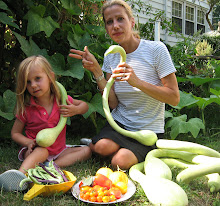
Showing posts with label Eco-nomics. Show all posts

Sunday, March 20, 2011

Stray Not, Thy Wandering Heart: This Year’s Seed Order

Last year, I purchased some yellow wax pole bean seeds and other vegetable seeds from another catalog. I felt somewhat guilty betraying John Scheepers Kitchen Garden Seeds, since they were the first and best source when my more serious ventures in suburban agriculture started a few years ago. Midway through last season, I asked myself, “Why did I ever stray?”

The company is based in Connecticut, a neighboring state, so I can keep my dollars somewhat local. The catalog never fails to satisfy in both its charm and information. But, more importantly, the seeds are flat-out great. Some three-year-old Scheepers seeds I used last year had better germination rates and heavier vegetable production than the new ones I purchased from the other source. Suffice it to say, save some collard greens from the 4/$1 seed stand at my grocery store, just about everything going in the ground this year will be from Scheepers.

And (drum roll please…) the new purchases are:

Winter Red Russian Kale
Purple Dragon Carrots
Lemon Cucumbers
Zucchetta Trombolina Zucchini
Purple Podded Pole Beans (a perennial favorite)
Both red and yellow “jellybean” grape tomatoes
Sungold cherry tomatoes
Lyn’s Mahogany Garnet tomatoes
Persimmon tomatoes
Australian Butter Squash (for winter storage)

I’m especially excited about the new squash. Winter squashes have done quite well in my yard in years past and (I pray I’m not jinxing it here) I hope this new variety will do just as well and pleasantly surprise with its flavor and storage potential. The Australian Butter Squash is described as a “pumpkin-shaped heirloom, prolific, tasty and versatile with a pale, buff-orange hard shell and sweet, dense orange flesh with a small seed cavity…Weighing in at 12-15 pounds, list long-keeper may be stored and used throughout the winter.”

The areas for my cool-weather crops are turned over and ready, so the following will be planted shortly: the new red kale, Tuscan Lacinato Kale (older seeds, still viable), collard greens, and various lettuces. In a few weeks, the carrots and some parsnip seeds (not yet purchased) should make their way into sweet Mother Earth.

So, with seeds about to go in the ground, I may as well start the Eco-Nomics of it all for the 2011 growing season:

Scheepers Order: $37.15
Collards, w/tax $ 0.27
Total: $37.42

I have peat pellets left over from last year, along with their reusable growing trays and some seed starting mix. My daughter and I will start our tomato seeds shortly. Most everything else will be directly sown. We’ll keep you posted.

Monday, August 2, 2010

Waiting for the Rain

The rain was supposed to come on Sunday, so we headed out in the morning to check the beds and harvest what had grown while the weather was still dry.

Pay dirt!

The chard was tall, thick and plentiful – just look at the glossy green leaves on the white variety. The radicchio (the last two of four heads) was huge, with green outer leaves and large, burgundy spherical centers. I removed the outer leaves (they can be pretty bitter), but kept them to wilt on a hot grill, which mitigates the flavor. The lemon cucumbers are coming in nicely, adding to the Kirby cucumber haul. We’ve been picking both red and orange cherry tomatoes for weeks, which never make it to the table; they’re so sweet straight off the vine. But our first really large tomato (German Gold, a pale orange variety) came off the vine with ease on Sunday. We left her blushing sisters to ripen just a bit further. We’ve got both Rosa Bianca and slender white eggplants on their way, as well as three dark green acorn squashes (too early!) almost ready to be picked and vines full of tennis-ball sized babies that should ripen into a basketful come September.

But no zucchini. Or pattypan squash. Naturally, just as soon as I’d made the boast that I was giving away mountains of produce did nature strike me back for the brag.

Last Sunday, we experienced a long, torrential downpour with force so violent that the beds were severely beaten down and some structures blown over. We lost power into the night as well. After righting the tomato cages and pole bean obelisks when the rain let up, I surveyed the damage. The center bed consisting mainly of squash had really taken a hit.

“Oh, they’ll bounce back,” I told myself. “They always do.” By midweek, some leaves were back up and filling in, but not many. Yesterday, I really looked: the storm severed a lot of the rambling vines right off of their main stems. Whatever little orbs I had growing on the vines before the storm were hollow, soft or simply dead. The vines themselves are bleached and turning dry. The main stems are trying to send off new shoots – nature is amazing – so I’ll keep you up to date on their success.

This weekend’s rain never did come. I really need to water, not just to keep up production, but to nurture the squash bed back to health.

But for now, let’s break even on Eco-nomics – I knew the chard would put me over the top. To be honest, I more than broken even a while ago. I haven’t been keeping up on the harvest tally like last year, and beyond this date, I may not do it to the dollar. Oh, the garden is producing – don’t get me wrong, I’ve picked more salads than I care to calculate, not even tallying the first two heads of radicchio – but I think I’ll keep a roundabout running total offline and approximate at the end of the season. And anyway, my pricing is admittedly somewhat less than scientific this time around and as last year, a bit on the low side.

Triple bale of chard $5
Radicchio $5
3 lbs cukes @ $.99/lb $2.97
3+ lbs cherry & other tomatoes @ $1.29 $3.87
2 lbs purple and yellow beans @1.29 $2.58
From $6.86 in the red last time: Ahead by $12.56

Wednesday, June 16, 2010

Eating Our Way Through the Backyard

It has begun.

On Saturday evening, my daughter ate her way through the backyard. Starting with our black raspberry bush, whose canes are producing like gangbusters this year, she picked the outer few while I waded into the thorny underbrush to get the rest. Dee-lish! After that, we hit the sugar snap peas, swollen from recent rain for the loudest “snap” with each sweet bite. She ventured on to both purple and green basil – a nice garnish, she said. I nibbled some outer leaves of my mache to try, but she took a pass and “traded” me for my share of the sugar snaps. We’ve also picked the equivalent of a $3.99 grocery-store clamshell of mesclun for a few salads so far this year.

It wasn’t exactly a feast that night, but it was fun and it really felt like summer again.

And, like last year, things are just coming up on their own from seeds, compost, buried kitchen scraps or whatever wintered over. So far, we’ve got two types of climbing beans and no fewer than a dozen “secret” tomato plants popping up in the squash beds and elsewhere, which I have thinned to six of the strongest plants. The biggest surprise? Our secret potatoes. I looked out the back window last month during a rainy weekend and kept wondering about this weed, or something, that just kept getting bigger and bigger. When I ventured out on that finally-dry Monday afternoon, I recognized it immediately: it was a potato plant! Did we miss one of the fingerlings or russets during the harvest last year? I laughed so hard.

The funny thing is that when I told my daughter upon picking her up from kindergarten, she bolted out of the car and into the backyard, hunted around a bit then quickly identified it. Yes, we all know what a potato looks like, but how many of you out there know what the actual plant looks like?

That’s my girl. I’m proud of her. And the fun really has begun.

Eco-nomics update:
Romano Bean Seeds $0.80
Kirby Cucumbers $1.99
4-Pack of Tomatoes w/5 plants $1.99
Acorn Squash $1.79
Eggplants – 2 pks @$1.99 $3.98
Sugar Baby Watermelons $1.98
Subtotal: $10.55
Added to previous total $18.31
Total Spent: $28.86

Harvested:
Picked salad greens $3.99
Handfuls of sugar snaps $1.50

In the black by: $23.37

Tuesday, April 6, 2010

Early Beginnings

The farm has begun.

Tuscan kale, sugar snap peas, rhubarb Swiss chard, rainbow Swiss chard, a row of golden beets and wide patch of baby lettuces are all in the ground. Save the $1.19 mesclun mix, every seed was left over from last year or the year before. They’re still viable, and coming up.

When I purchased the mesclun seeds early last month, I had to exercise some restraint. When we see the first seed stands of the season, my daughter and I both become wide-eyed and energized. I’m like a kid in a candy store – full of hope for the growing season to come. Then we’ll bounce from store to store to see if other seed stands are up and running. She just goes insane, picking packet after packet until they spill out of her little hands. “Let’s grow this!” “Can we grow corn?” “I want the carrots again!”

Ah, that “again.” I knew we had some red carrot seeds from last year, but hadn’t taken a full seed inventory and didn’t remember precisely what I had on hand. We bought just the mesclun mix (with one of us leaving the store moping) then headed home to check our stock.

We had just about everything in the quantities needed for a good harvest. We did not, however, have enough varieties to fill all of the beds. I want to try more “storable” items for winter, like squashes, maybe parsnips and definitely more potatoes than I did last year. I also wanted a few different summer crops, specifically yellow wax beans.

My favorite catalog, John Scheepers, had only a bush variety. Plus, all the seeds I’m re-using this year are Scheepers seeds. Should I forsake them for a different company? I did: Jung Seeds had a climbing wax bean, “Kentucky Wonder,” so my daughter and I and I built an order around it.

Along with the pole beans, we chose mixed color eight ball zucchini, mixed pattypan squash, mache (or lamb’s ear lettuce) and dwarf pak choi.

The baby bok choy was an impulse at the end – a good one, I hope. It’s easy to grow and quick to harvest. And we like vegetarian stir-fries in this household.

The seeds haven’t come yet … I’m getting a little worried. The time for planting the mache will soon pass.

So, with seeds in the ground and more on the way, I may as well start the Eco-Nomics for the season:

Mesclun seeds $ 1.19
Jung Seeds $16.12
Total: $18.31

Inventory also went beyond seeds. I have peat pellets left over from last year, along with the reusable growing trays and half a bag of seed starting mix. My daughter and I will start our tomato seeds this week.

Wednesday, November 4, 2009

Last Call

It’s over.

Two and a half pounds of knobby, gnarly, hairy-rooted celeriac came out of the ground this weekend.

I sat solemnly astride a pail of water, knife in hand, silently slicing off the tall, green tops, then gently removing roots and ends, dipping each muddy orb into the water as it took shape. My bare hands turned increasingly purple and stiff, wet from the water, further chilled by the very cold Sunday air.

When all were cleaned, I sat on the grass, eyeing the empty celery root area of that largest bed. It grew aside the potatoes. I lifted my body up briefly, with the intention of digging in the potato area with my bare frozen hands in the hopes of finding a stray spud. Then I mentally pictured the desperate act I was considering.

In the end, I preserved my last shred of dignity and did not dig. I went inside, closed the back door and called it a season.

Last Eco-Nomics:
2.5 lbs Celery Root @ $2.99:
Total: $7.48

Last Eco-nomics posting: $186.05
This harvest tally: $7.48
Ahead by a Total of: $193.53
“Whole Foods” Pricing: $193.53 x 3.5 = $677.36

Not bad for a few handfuls of seeds and a rack of peat pellets.

Keep in mind that I’ve been keeping track of an “ahead by” figure – i.e., my garden actually produced $243.23 worth of goods, but I knocked off the initial expense of $49.70.

I can’t wait for next year.

Tuesday, October 20, 2009

Nearing the End

I knew this day would come.

It’s time to put my beds to bed. I have been putting it off for reasons other than the cold and the tangled mess of refuse it will create. I just don’t want the gardening season to be over.

But my squash vines are unsightly and dying. The tomatoes are not ripening. The bean vines long ago stopped producing in any meaningful way and have lost most of their leaves. All my potatoes are harvested. The celery root is ready to come out of the ground.

I cleared out the first bed two Sundays ago by picking the last of the Swiss Chard, a double bale. The stems were narrow and tender, and the colors were far deeper than seen earlier, likely due to the cold weather and the fact that I left the leaves out for so long in the false hope that my garden could survive the winter. The Kentucky Wonder bean vines covering those trellises and winding up the gutter pipe managed to put out one last pound of beans. Not bad for four or five year old seeds planted “just to see” if they’d grow. Some beans dried and went to seed, so I collected those seeds for use next year.

The tomato vines have grown rattier with each passing day, yet they were still completely heavily laden with fruit, all green. We collected each possibly usable tomato and placed them in paper bags to ripen indoors. The brown and cold-injured fruits went to be composted. I pray the tomatoes will ripen in the bags and I can squeeze out one last panzanella from them, as they are largely Sungold and black cherry tomatoes. I’ll let you know what happens. The larger mortgage lifters, black Russians and my daughter’s yellow tomatoes did not fare well once the cold set in.

One and a half pounds of pattypan squash emerged from the squash bed, which started look a bit ratty during Labor Day weekend. The buttercup squash vines had long since died; the pattypans, a summer squash, gave a good fight. The butternut vines, however, keep pumping out flowers, even in their unsightly condition. They also bear two new squashes – little as they are, I’m keeping that area untouched, in the hopes that they will mature before a serious frost. Hope springs eternal.

It does, actually. Due to four days of rain in the forecast this past weekend, I decided to leave my celery root in the ground in the hopes that each will plump up just a bit more. I left the chili pepper plants alone, since those peppers stand on the ends of the plants like firecrackers – a bit of red-hot cheer in the shortening days of autumn. A girl can dream, can’t she?

Eco-Nomics:
Double Bunch of Swiss Chard: 2 lbs @ $2 = $4
One Last pound of beans @ $.99 = $.99
Pattypan Squash: 1.5 lbs @ $1.50 = $2.25
The last Zucchetta Trombolina: 1.5 lbs @ $.99 = $1.49
Total: $8.73

Last Eco-nomics posting: $177.32
This harvest tally: $8.73
Ahead by a Total of: $186.05
“Whole Foods” Pricing: $x 3.5 = $651.18

Tuesday, October 6, 2009

The Earth Gives

Remember, “It’s a Potato! It’s a Potato!”?

This time, it was 65 potatoes.

We harvested the fingerlings to utter amazement – truly shock and awe.

One fingerling potato went into the ground this spring. Sixty-Five came out this weekend. I am not kidding. Some are the size of golf balls, but most are quite sizable and eminently roastable with garlic confit and a crunch of sea salt. I’m salivating as they cure for a few days on the back porch.

The quantity simply blew me away. My daughter counted them out as we sat on the patio, enveloped by the flame sunset of autumn. The counting just went on and on, our eyes widening further at each turn of ten: 30, then 40, then 50, then 60 …

And thank goodness she came out to help. The roots and tubers spread into a circumference far beyond anything I would have expected. We kept digging, excavating, and finding more and more roots that wended their ways sideways in a starburst throughout the bed. Some roots were thick, some were spidery, but when we pulled them gently, guaranteed there would be more tubers greeting us at the ends.

The Earth gives and gives. One thumb sized fingerling yielded just so much. I saw firsthand why potatoes are a staple crop in the world, how civilizations have been built upon successful crops, and have fallen in their failure. The garden has given me a great deal this year, more so than in years past and not just in terms of crops. Add to that a new level of respect for Mother Earth – it seems in a way almost crass that I’m doing a running tally of monetary gains.

Suffice it to say, once the garden is put to bed, I can’t wait to start composting and amending her soil until a hard freeze, then commence again come spring. Dirty work it is, but it’s the least I can do.

Eco-Nomics:
Fingerling Potatoes: 9 lbs @ $.99 = $8.91
Butternut Squash: 24 lbs @ $.99 = $23.76
Tomatoes: 4 usable lbs @ $.99 = $3.96
Pattypan squash: 2 lbs @ $1.50: $3
Zucchetta Trombolina: 6 lbs @ $.99 = $5.94
Total: $45.57

Last Eco-nomics posting: $129.65
This harvest tally: $45.57
Ahead by a Total of: $177.22
“Whole Foods” Pricing: $x 3.5 = $613.27

Monday, September 14, 2009

It’s a Potato! It’s a Potato!

It was time.

Turning fork in hand, I headed out to harvest some russet potatoes. The vines of one plant had been declining slowly in recent weeks, and I’d been itching to dig them up. Oddly, my daughter was not so into it, “Nah, I don’t feel like it.” But once the messiness began, she got into the game.

I found the first potato close to the surface, where I’d been peeking at it and checking on it for weeks. It was about the size of an elongated tennis ball. I gently but deeply forked a wide area around the plant and brought up another little guy. My daughter was not impressed. The next forking brought up a monster: it was HUGE! Even I couldn’t believe my eyes. That’s when she ran to the shed, retrieved her Dora the Explorer hand-cultivator and got really into it, digging through the pile of loose soil.

What she got was a rock – which, upon realizing it, she tossed immediately into a side bed. We both persisted. She found another rock. So did I. I forked some more. Things didn’t look promising.

“Mom, I found one!”

“Is it a rock or a potato?”

She moved her hand up and down as if to check the weight. She wiped off some dirt with her little nearly-five-year-old thumbs. Her eyes widened to the size of saucers.

“It’s a potato! It’s a potato!” she screamed and squealed, running in circles, waving the spud over her head. I started laughing my head off at her reaction. Senor Wences got spooked, bolted out from beneath the hostas and made it to the other side of the yard like a bat out of hell. And she’s dancing around in a loop, squealing with a potato. Yeah, life’s crazy in the backyard.

We dug and checked as if panning for gold until I felt safe no more were in the area. I left the other russet and the fingerling plant undisturbed, as their vines are still green and, I assume, nourishing their tubers.

So, in this instance, one-half a spud thudded into the ground on a whim yielded eight potatoes – nice return! Two are huge, almost the length of my daughter’s head. The others are of varying, medium size, with one tiny pepino. One of the larger ones was damaged during the harvest, so we used it in our Sunday dinner, cut lengthwise and grilled with olive oil, garlic and fresh rosemary. It was pillowy soft, sweet and whiter inside than any russet I’ve ever prepared. Since the potato was uncured, its skin came off almost completely with just a gentle scrubbing.

In fact, everything we ate Sunday night came from our garden, except for the chicken. I gave the bone-in chicken a super-herb treatment with parsley, sage, rosemary & thyme (nod to S&G there), steamed a huge quantity of the purple beans, made “summer on a plate” with tomatoes of all colors and lettuce-leaf basil, and prepared the giant potato with a buttercup squash, which was also excellent: very orange, sweet and quite pumpkin-y.

So, let’s update Eco-Nomics. It was a banner week and weekend for tomatoes, with over a dozen pounds by Friday and another five picked on Sunday. Until the potatoes came into our lives yesterday afternoon, I planned on writing their own entry. But for now, I’ll just let the pictures and poundage speak for themselves.

Russet Potatoes: 6 lbs @ $.89 = $5.34
Tomatoes: 17 lbs @ $.99 = $17
Tuscan Kale: $4
Haricot Verts: 1/2 lb @ $2.49/lb= $1.25
Purple Pole Beans: 1 lb (probably our last) @ $2=$2
Green Beans: 1/2 lb @ $.99/lb: $.50
Pattypan squash: 4 lbs @ $1.50: $6
Total: $36.09

Last Eco-nomics posting: $97.56
This harvest: $36.09
Ahead by a Total of: $123.65
Whole Foods” Pricing: $129.65 x 3.5 = $467.78

Friday, September 4, 2009

Still Clipping Along

Our nights have grown very cool, very fast, but the garden is still clipping along and still producing. The cooler weather will suit my celery root just fine, which I’ll harvest later this month or in October. The fragrant, bulbous root ends are peeking out of the ground a bit, but still seem small. The potatoes may be ready soon; the vines appear to be on the decline, ever so slightly. I should start some new lettuce seeds over the weekend, and perhaps a row of Tuscan kale and a maybe few cauliflowers. Plus, at the rate my winter squash is still growing and producing new flowers and fruits, I’ll have a huge second harvest later this month – and butternut squash six-ways for Thanksgiving. I’m glad I made that impulse buy and “splurged” on that 20-cent package of seeds!

Another two week’s harvest, as of Friday, the 4th:

Lemon Cucumbers: 3 lbs @ $.99 = $2.97
Haricot Verts: 1 lb @ $2.49/lb= $2.49
Kwintus Beans: 1.5 lbs @1.29/lb = $1.94
Purple Pole Beans: 1.5 lbs @ $2=$3
Green Beans: 1/2 lb @ $.99/lb: $.50
Another 3 lbs Pattypan squash @ $1.50: $ 4.50
3+ pints of cherry tomatoes: $6
6+ Lbs reds, blacks, yellows, striped: $6
Total: $27.40

Last Eco-nomics posting: $70.16
This harvest: $27.40
Total: $97.56

I will indulge from here on out and include a “Whole Foods” price (see previous post). Whole Foods charges five (5) times what I “charge” here for my tomatoes; twice what I do for haricot vert; nearly 5 ½ times what I do for pattypan; 4 times for the chard; twice what I do for other beans … you get the picture. I think a factor of 3.5 should do it:
“Whole Foods” Pricing: $97.56 x 3.5 = $341.46

Thursday, August 27, 2009

Whole Foods Pricing - Eco-Nomics

My friend stated flatly last weekend, “Elise, you’re selling yourself short on your blog.”

She maintains that I don’t enter the right prices in Eco-Nomics. While my method isn’t exactly scientific, I price my produce as I find it in my travels or in my supermarket circular or, to be honest, what I think it might cost as I type away blearily at night and err on the side of caution, on both pricing and weights.

Presented with an offering of fresh basil, a nosegay of chervil, a trio of lemon cucumbers and a mess of purple-podded pole beans, she said, almost salivating, “You have no idea what some people would pay for this.”

Perhaps I am selling a bit short. I could “charge” organic prices in Eco-Nomics for any and all that I harvest. I compost, so that’s natural stewardship of the soil. I don’t use pesticides, fertilizers, Miracle-Gro, sprays – the only thing that touches my plants is rainwater. If my daughter wants to pick and eat her way through the backyard any afternoon, I have no worries, and she’s done so since she was a toddler.

I take my mom to DePiero Farms in Bergen County some Sundays, since it’s also a nice place to walk around, and it charges $3.99/lb for heirloom tomatoes – not designated organic, just heirloom. I also go there in the hopes that I’ll find at least some of the things growing in my backyard for comparable pricing, from purple beans (no dice) to pattypan squash ($10.99/lb for baby pattypans.) That’s unconscionable – and ridiculous! First, I don’t pick mine at the ping-pong ball stage. And even if I did, there’s no way I’d enter that price into Eco-Nomics, because it’s not a price I’m willing to pay. And don’t even get me started on Rhubarb, which is a perennial and comes back for free every year in greater quantities: It costs upwards of $5 a pound, both there and at ShopRite when they have it.

Still, my friend persisted. So I finally headed to Whole Foods in the hopes that it would carry some examples of my produce, which would be organic as well, and I could find out what the store charges and what people are willing to pay for it. I hit the new Fairway for good measure as well.

Holy mackerel.

Organic Heirloom tomatoes cost $4.99 per pound at Whole Foods. The bin was colorful and enticing to be sure, and I gently went through it to see what sorts were represented: There were my Black Russians! And my daughter’s favorite yellows, among gold and green striped (got those, too), white (never grown them), the pale persimmon tomatoes (did those last year – scrumptious) and every shape and wrinkle of red. The skimpy pints of small “Gourmet Medley” tomatoes, at $4.99 each, could have come straight from my backyard as well: lots of orange and red and some purples. For five dollars. Five dollars. And people had them in their carts!

There were no purple beans at Whole Foods or Fairway, but I did find my little haricot verts: pre-packaged from Mexico, $4.99 for a one-pound bag at Whole Paycheck. Organic, yes, but I was somewhat surprised at the measly size of the pound-package. I’m underweighing and under eye-balling mine!

I also could not believe what $2.99 buys you in Swiss Chard: That price per bunch gets you, on average, 8 ½ stalks. I say 8 ½ because those that featured nine stalks had nine that were on the thin side – and I’m being generous in that assessment. Those that contained eight may have had wider stalks, but there were always one or two scraggly stragglers in each bunch, every time. Yes, I stood there counting the contents of twist-tied bunches of both red and white organic chard. You’d fare better at Fairway, with its $1.99/bunch price for at least a somewhat larger bunch of conventional red or white chard.

At least small pattypan squash didn’t cost $10.99/lb – it was “only” $7.99/lb. The butternut squash at both spots was new and fresh, first of the season like mine – but pound for pound, I’m glad I don’t need to buy it!

I had to stop there – or just stop here. I did canvass fully, but couldn’t find specifically what I was growing; only things that were somewhat close. I also must resist rambling on here like my overeager squash and bean vines. Suffice it to say, my friend is kind of right. Plus, I’ve got a potential gold mine back there, and a tasty one at that.

Tuesday, August 25, 2009

Theater of the Absurd

That seems to be what my backyard has become.

Heavy rains were to arrive by Friday night. So late in the afternoon, I went out to pick a few tomatoes and other things that the rain might knock off of their vines. I brought a large melamine bowl out, and started with the cucumbers. Filled within minutes, I had to go back inside to get the big colander.

Walking back to the garden, I noticed a buttercup squash was disconnected from its vine. Apparently, it was ready to be picked – it picked itself. I found another one. Then I checked the butternut squashes, which have been of the right color for weeks, but I didn’t know if they’d be ready – they are for winter storage. Well, they were. Back inside, to empty the colander. Then back to the squash patch for the last butternut and to check for pattypans. Back to the house to empty the colander, and out again to finally start on the tomatoes.

Oops, there’s a giant zucchini hanging from its climbing vines! Cut down with a knife, it doesn’t fit anywhere and is laid on a patio table. I also thought I’d check the “secret” potato plant behind that trellis. I don’t think I mentioned it, but about 6 weeks ago, I spied a familiar-looking plant in the back of a bed. I thought it was a potato plant, so I excavated a little and came up with a tiny, red new potato, and tucked it back into the ground. No, I did not plant new potatoes. I had and have no idea where it came from – did I compost some old potatoes at some point? I have things just growing out of nowhere, and this is not the only “surprise” plant. Like I said, this has become the theater of the absurd. I dig a bit with my fingers and the knife and come up with a handful of potatoes. Thank goodness I’m wearing something with pockets today.

Onto the tomatoes – finally. Large varieties first, so the heavy ones are on the bottom. OK, I still have room in the colander for the cherry tomatoes. They roll down to fill in between the large mortgage lifters, yellows and at last! A succulent Black Russian tomato larger than a man’s fist. My two cherry varieties fill the colander to the 2/3 point. May as well check on the beans in the next bed.

The haricot verts fill that last third. No, I am not going back into the house for the umpteenth time to empty this thing. I pile the purple beans on top. Then move onto the Kwintus pole beans, which I proceed to jam vertically into any space I find around the rim. I call my daughter over to hold out her dress, which we use to cradle the overflow.

Overflow is an understatement: just look at the kitchen counter! I’m laughing out loud at this point. I decide not to even deal with the chard. Where all of this came from? It’s ridiculous! And the thing is, while harvesting what amounted to a true and truly unexpected bounty, I spied a good deal more that needed another day or two on their vines. Come Sunday or Monday, we’d do it all over again!

In the interim, I made the freshest, most luscious panzanella salad with the tomatoes that night, a cucumber and farro grain salad side dish (recipe to come), a platter of grilled pattypan squash finished with Romano cheese on Saturday, a corn-basil-tomato and kidney bean salad on Sunday for Monday and Tuesday lunches, and broke out the ZipLoc freezer bags to start preparing produce for the winter.

Lemon Cukes: 4 lbs @ $.99 = $3.96
Haricot Verts: 1 lb @ $2.49/lb= $2.49
Kwintus Beans: 1+ lbs @1.29/lb = $1.29
Purple Pole Beans: Another lb @ $2=$2
3 lbs Pattypan squash @ $1.50: $ 4.50
2+ pints of cherry tomatoes: $4
2 Lbs Mortgage lifter reds plus the big Black Russian plus another lb of yellows: $5
One big zuchetta trombolina (2 lbs @ $.99) $1.98
2 large Buttercup squashes: $5
5 Butternut squashes of varying sizes, all nicely heavy: $9
Total: $39.22

Last Eco-nomics posting, in the black by $30.94
Plus Friday’s circus: $39.22
Total: $70.16

Tuesday, August 18, 2009

In The Black

While it has been all about chard and beans in recent weeks, we’ve turned the corner into real Jersey territory: Tomatoes!

We’ve got tomatoes in many colors: red, orange, yellow and purple, and awaiting a striped variety to ripen. For some reason, my daughter loves those yellow tomatoes: When we were selecting seeds from catalogs in January then starting them in peat pellets in early spring, she repeatedly (almost obsessively) had to make sure we had purchased and planted the yellows. We had seeds leftover from last year, which we used – but don’t tell her! While that first mortgage lifter picked last week was nearly as big as her face, she had a different gleam in her eyes upon proudly picking her first yellow tomato this weekend.

And yes, she ate it right then and there, like an apple.


Two week’s harvest, as of Saturday, the 15th:

Chard: 3 armloads @ $2= $6.00
Lemon Cukes plus some Kirbies: easily 5 lbs @ $.99 = $1.98
Haricot Verts: 1 lb @ $2.49/lb= $2.49
Kwintus Beans: well over 2 lbs @1.29/lb = $2.58
Purple Pole Beans: About 2 lbs @ $2=$4
Green Beans: 1 lb @ $.99/lb. (see below)
3 lbs Pattypan squash @ $1.50: $ 4.50
And Tomatoes!!!!
2+ pints of cherry tomatoes, mostly SunGold: $4
4 Lbs Mortgage lifter reds: $4
A pound of sweet yellows: $1
Total: $31.55

Last Eco-nomics posting, I was in the red by $0.60
This two-week harvest: $31.54
In the Black! By $30.94.


The chard seems to be slowing down a bit (whew!), although I still plan to use my trading tactic in future recipes and preparations. I thought that my bean vines had slowed completely – with only about 1 lb of filets over two weeks - so I let them be for a bit, and honestly forgot to look at them. Big mistake: The fridge is full of big bags of beans, including Kentucky Wonder pole beans, those 4-year-old seeds I came across and thought I’d plant because, hey, you never know. I had completely forgotten about those, since they’re planted in a different area than the others and they are now threatening to take down a gutter downspout.

I’ve said before that giving it away is half the fun of growing it, and with the addition of fresh-picked tomatoes, those around me are increasingly happy to take some harvest off my hands.

Monday, August 3, 2009

Things to do with a Heavy Harvest

It's not that heavy yet, but half the fun of growing it is giving it away: I can’t imagine anyone turning down a surprise basket of freshly picked vegetables topped with a bouquet of basil and other herbs. But the better half to me is figuring out what to do with it all and inventing new favorites along the way. True, baking is science and you should measure, but cooking is a conversation: let the ingredients take you where they may, and the night lead you where it might. It’s feeling, emotion, l’amore!

I’d mentioned earlier that I’m on my way to writing “Chard 118 Ways” and that should have its own entry. My chervil is a large, productive cloud of delicate green fronds. The cucumbers, both green and yellow, have made their way into newly minted salads (both green and grain salads) and of course into tzatziki recently. Due to the rains, the vines are laden with fruit. The filet beans are still the best simply steamed. I don’t want this to become a laundry list of uses and recipes, so I’ll touch on just three items: Kwintus pole beans, purple beans and pattypan squash.

I’ve done a lot with the Kwintus beans, as noted in quite a few previous entries. But I somehow brought out a new layer of nutty flavor last week when I hosted a dinner. Because the beans are larger and wouldn’t fall through the grates, I decided to grill them at the last minute. I took the meat off the grill to rest before serving, did a quick brush cleaning of the grates, and set to work.
I made my basic grilling toss of olive oil, garlic, S & P, and then finished the grilled beans with a generous douse of fresh lemon juice, parsley and shavings of good Romano cheese and Whoa! They were crisp and still green, yet blistered and black – unbelievably savory and sexy as hell to look at, glistening and tangled together, entwined on a rustic Tuscan pottery platter. I could have made a meal out of them and licked the plate clean. But I had guests over that night and had to pray for leftovers. There weren’t any.

While we grew them last year, Mike has discovered the purple pole beans this summer. I feel as if I’ve rediscovered them a bit myself: I do not remember the color being so velvety, deep and dramatic. They’re just gorgeous! They turn green when cooked, but are largely eaten raw in our household, with long ones sliced in half on a diagonal and eaten plain or with store bought or home made hummus or a basil-y version of my white bean hummus. I served these purple beans raw and cut in half on the bias, their pencil-point tips sticking upward in two chilled cocktail glasses in the aforementioned dinner as somewhat of an afterthought. They were just healthy nibblies served with appetizers, then kept on the table through dinner. All were gone at the end of the night. This weekend, I sliced them into centimeter pieces and tossed them into a summer standard bean salad (cannelini and pink or pinto beans, celery, tomato, loads of parsley, red vinaigrette) – you can’t go wrong with extra crunch and greenery, or purple-ry in this case.

The pattypans are new to my husband – he’d never had them before, or knew they existed. I still remember when he first discovered them growing in the squash patch, asking “What in the heck are those disk things growing outside?” I thought he’d discovered a fungus or mushrooms which, considering all the rain we’ve had, would be our most prolific crop this year, if edible. With their ruffly edges and flying-saucer shape, Mike was a bit skeptical of the squash. But the proof is in the pudding, and taste: Tossed in olive oil, microplaned garlic, lemon juice, S & P, then grilled and finished with a flurry of fresh parsley (and/or basil), he’s convinced now.

I will do exactly that with my Rosa Bianca eggplants – if the plants would even grow! They are tropical and need constant heat. We have had a ton of rain and very cool nights, with barely a day reaching 90 degrees yet this summer. Good for my water and electric bills, but not for the eggplants. I could do an entire entry on just the weather conditions and how they’re affecting the crops – maybe I will. Suffice it to say, many foods are very, very late compared to years past, including tomatoes (barely a half-pint of Sungold Cherries so far) and notably the Zuchetta Trombolina (not a single one yet). That was my earliest heavy-harvest summer crop last year and the most eagerly-awaited this year.

But I am grateful for the success of the garden so far. Very pleased, actually, with the amount of production.

In fact, I’ll quickly add here another bale of Swiss chard ($2.50), another pound and a half of lemon cukes and ½ lb. kirbies ($2), a gorgeous nearly-two-pound bunch of red carrots ($2) and a big basket of beans ($4, all varieties) to the Eco-nomics Harvest:

Expenditures: $49.70
Less Harvest: $49.10 ($21.56 + $17.04 + $10.50, this entry)
Total: - $0.60

Monday, July 27, 2009

Harvest II


This entry will be short and sweet, but the garden is long on flavor and becoming heavy on production. As I mentioned last week, the chard went to my dad. I prepared it with him, using a little olive oil, garlic, S, P and a spritz of lemon at the end. He devoured it – which is good, since the chard keeps regenerating beyond my rate of consumption. I also gave a nice-sized bag of the purple pole beans to my sister on Thursday - I was glad to, she's great. And my daughter was very proud to do so.

I’ve also harvested chervil, other herbs, another bowlful of lettuce – little bits that I should calculate, but I’m just not in the mood to nickel and dime. The garden has given me a great deal, both physically and otherwise.

Everything else is producing steadily, and a few SunGold cherry tomatoes have ripened to orange. None has made it to the table – picked, eaten and savored on the spot. The picture at right was taken on Wednesday; the week’s harvest was tallied as of Saturday, the 25th:

Chard: 1 @ $2= $2.00
Kirby Cukes: 1 lb @ $.99/lb (Shop Rite price)= $.99
Lemon Cukes: 2 lb @ $.99 = $1.98
Haricot Verts: 1 lb @ $2.49/lb= $2.49
Kwintus Beans: 2 lbs @1.29/lb = $2.58
Purple Pole Beans: Over 2 lbs @ $2=$4
2 lbs Pattypan squash @ $1.50: $3
Total: $17.04

Expenditures: $49.70
Less Harvest: $38.60 ($21.56 + $17.04)
Total: - $11.10

I never thought the break-even point would be on its way so early!

Friday, July 17, 2009

Eco-nomics: Harvest


It’s payback.

So far, I’ve harvested four armloads of Swiss Chard, and I’m not kidding about the word “armloads.” Holy mackerel. I’ll conservatively put each at $2.50, considering what $1.29/lb gets you at my supermarket. Some baby leaves have been making their way into salads all along. The chard is also just unbelievable: the colors are so bright, so varied and the volume speaks for itself. Just like “Cannoli 18 Ways,” I’m on my way to writing “Chard 118 Ways.” I love it, as does Mike, but we’re nearing overload. The next bale of greens has my father’s name on it.

I’m also up to my ears in cucumbers, which seem early to me this year. We’ve picked at least a pound of kirbies, which barely make it to the table. My daughter eats them straight off the vine – she goes hunting for them, actually. I’m glad I tried something new this year and planted them! The lemon cucumbers are coming in like gangbusters. I’ve picked a few here and there, but come next week, there are at least a dozen that will be ready. Each time I look at the vines, I can’t believe my eyes. I’ll tally those at that time.

The little filet beans are early producers, and at least a pound have come off the vines. They are delicate and sweet, and even the ones that elude us and grow too long are super tender as well. A lot of these little beans go into a pound. If I let them grow larger, the harvest weights would be higher. But I grew these to be picked small. Next time I come into some good tuna steaks, a salad nicoise will be in order, and especially when my fingerling potatoes are ready in the fall.

A big surprise is the Kwintus pole beans. I was not expecting these to come in so early, but MAN – do those vines produce! The beans also grow fast. Those left on the vine for an extra day jump out at you the next, reaching eight inches seemingly overnight. And even at that length with a 1” width, they are tender and stringless – excellent cut on a diagonal and steamed, sautéed or tossed into a hot sausage and peppery pasta dish like the one I made last week for my husband. The beans keep their crunch and their color beautifully when cooked. Plus, we’re up to almost 2 lbs picked. I gave a bag of them to my parents this weekend, with rave reviews when they cooked them. I’ve never seen these at the store, so I’ll just price them as regular green beans, which are $1.29/lb lately.

Volumes of tender green small leaf lettuce along with two very large heads of red loose leaf lettuce have created some great salads. I would easily have spent more than $4 for this at the store – quite a nice return on that impulse buy of two 20-cent seed packets! I can’t wait to plant more in the fall. The lettuces are in pots, so the rabbits haven’t marauded them. The same can’t be said for my four heads of cauliflower. Only one made it to full size and to the table.

We’ve also pulled a few red carrots, but I feel they need a bit more time in the ground. The one pattypan squash picked made its way to the grill – de-lish. Neither is really enough to tally right now, so I’ll omit them.

So, here goes, the first Eco-nomics Harvest Tally:

Chard: 4 @ $2.50= $10.00
Kirby Cukes: 1 lb @ $.99/lb (Shop Rite price)= $.99
Haricot Verts: 1 lb @ $2.49/lb= $2.49
Kwintus Beans: 2 lbs @1.29/lb = $2.58
Lettuces: $4.00
Cauliflower: $1.50
Total Harvest so far: $21.56

Total Expenditures: $49.70
Less Harvest: $21.56
Balance: $28.14

I’m still in the red, so to speak, but we’re getting there. And pretty far along at that.

Wednesday, July 8, 2009

Reflections on Tearing Lettuce

Summer arrived at about six on Sunday night, for the first time in probably more than a dozen years. I sat on the sun-warmed patio picking and tearing lettuce leaves for a salad, drifting away into, well, nowhere for, well, I don’t even know how long.

It all started with a routine task: making dinner. Getting a meal on the table can often be a race to the finish. We all know that. That night’s dinner prep started out no different, but ended in a place completely foreign to me.

With the chicken marinating and the vegetables cleaned and brushed with garlic and freshly picked herbs for the grill, I went outside to pick a salad. I stooped down with my big white colander and proceeded to turbo-pick my way through a thicket of overgrown salad greens. Both knees cracked as I crouched down. My neck creaked a bit, the result of a weekend wallpaper removal project where seemingly all the hard scraping and scrubbing was at the ceiling line. So I sat.

The patio was comforting and warm from the sun. Our orange cat mozied on over and sidled up to me to idle in the sun. Cats are good at this. My daughter flitted by with a butterfly net. And I sat.

For a few weeks now, I feel I’ve had a huge backlog of work, from refacing the kitchen and getting my daughter ready for camp, to weeding and writing. I’ve been meaning to update Eco-nomics with some harvest figures: three armloads of Swiss Chard, about a pound of Kirby cucumbers, and most recently pole beans that have come in earlier than expected, just under a pound of little haricot verts. And I was thinking about all of this while crouching over the lettuce pots, trying to speed my way to a 6:30 dinnertime. But still I sat.

While on the warm patio, with one cat sunning himself next to me and my daughter in her own little summer world, I was hypnotically picking lettuce leaves, reaching over for some baby chard leaves to add to the salad, and I found myself in a smooth groove of thinking. Of nearly nothing.

This never happens to me. It was utterly relaxing, and utterly human. And it was a long time in coming. Since then, I’m still feeling airy and relaxed, albeit slightly disconcerted. This is just not me. What comes next? Purchase a hammock then actually lay in it?

Any way around it, something is different. I’m relaxed and, dare I say it? Lax. Even the cats are reaping the benefits of this newfound tranquility. I barely make an effort to break up their fur-flying wrestling matches. More dinner? Sure, and extra canned food all around! The same goes for my daughter, who has plowed her way through half a box of Bomb Pops this week. Yes, I bought some junky Popsicles, those red, white and blue rockets emblematic of my childhood summers. As for the bare kitchen walls in desperate need of further patching and a coat of primer? I skipped that last night and took my daughter to a nearby park to play and ride her scooter in the twilight.

The garden is giving me far more than a $1.50 return on those lettuce seeds. It is giving me summer back.

Thursday, June 4, 2009

June is Bustin’ Out All Over

Bustin’? Well, that remains to be seen. But at least it’s off to a good start. Sprouts are sprouting, plants are planted and vines are twining. But my level impatience this year seems higher than ever, if that’s even possible. Here we go, from bed to bed, front to back:

The patch of corn with sunflowers rising in the background is off to a good start. I staggered the planting this year in hopes that the harvest will be spread out over a few weeks.

Red carrots and Swiss Chard varieties are clipping along in the small bed that lies astride the garage. Christmas lima beans and Kentucky Wonder green pole beans are planted to climb the trellises we built last year. It’s hard to believe this small bed used to be my sole planting area.

Lettuces are growing pots, as is my thyme plant. I moved my radicchio to one of the pots from a ground bed due to rabbits. The thyme will be planted on the rim of the main beds, along with a division of my oregano, when I both remember to do it and find time. An impossible combination.

Squash bed (1st/smallest): Winter squashes in alphabetical order from front to back, Buttercup, Butternut and Delicata. The last, large double-mound contains pattypan squash. Three climbing Zucchetta Trombolina plants are near the rhubarb in a corner of the yard.

Middle bed: Lemon cucumbers and Kirby cukes are ready to climb the staked twine. The kirbies also have flowers.

Tomatoes: Area is packed full, but plants are small. Why? I have no idea. The soil was pre-warmed, which made them shoot up and produce early and prolifically last year. But considering the size of the plants, I think I could have just skipped the mess, series of incidents and ensuing drama of starting them indoors and instead, direct-sowed the seeds with the same plant size resulting. Such is life. It’s only the first week of June. There’s time. I like to think each little tomato plant is developing a huge set of roots underground, where I can’t see. I attempted to plant them in backwards-alphabetical order starting with “Y”, but that lasted for only 1-½ rows. When I planted the Black Cherry tomatoes (or Black Russian?) before the Sungold Cherries, I wasn’t about to take them up and start over. I figured I’d just remember which was which. [What was I thinking?] I know where the heirloom yellows and two San Marzanos are. The rest will tastily surprise.

The largest bed starts with watermelon radishes and four cauliflowers. Believe it or not, the three little ones have white cauliflowers growing inside – at a competitive size with that of the large-leaved plant. Behind those, you’ll find the beets. No, I don’t see them either. I have a confession to make: I’m an inveterate bad-waterer. Notice the soaker hoses I bought and put down just this weekend. Thought it was about time. A top dressing of composted leaf humus will be the finishing touch.

Yellow bell peppers, one purple pepper and Rosa Bianca eggplants doing all right. Common basil and lettuce leaf basil in the center of that bed. You’ll also see four celery plants, which I purchased for $2 at the farmer’s market. They don’t count toward the running total, or to the harvest tally. It would be impossible to calculate, since I pick the celery constantly and the stalks regenerate themselves during the summer. It’s a terrific thing to grow for that purpose, since I only need a stalk or two for a grain salad or other dish, hardly ever an entire bunch. Also, hot chili peppers – a pair of plants I found at that bastion of green, the Home Depot. I found a pot that had two tall, strong plants, so I couldn’t resist. My dad (and father-in-law for that matter) can’t wait for them.

Pole beans are also planted in alphabetical order from front to back: Emerite filet, Kwintus and purple-podded. I love garden beans. They’re easy and dependable. Just have your four-year-old poke her finger into the soil, drop the seeds in, and soon enough they’re all vining and twining their way up the poles. The three tee-pees will be just gorgeous once the plants fully cover them and start to flower.

Celery Root surviving. And …

Potatoes! Two russets and a fingerling plant. I can’t believe it! Those spuds I thudded into the ground came up! The plants are strong and actually quite attractive. I had chalked them all up for lost, since our black and white cat, Senor Wences, found the loose and deeply dug soil irresistible for digging and rolling. They truly appeared out of nowhere. The russets surprise me the most, since they were supermarket potatoes from a 5-lb bag, and were probably sprayed with an anti-sprouting agent. Two of two came up. The fingerlings came from potatoes purchased at Whole Foods, labeled organic, and I assume not sprayed with anything. Only one of three came up. Either way, the plants appear to be growing fast, and they are sturdy. I’ve never grown potatoes before and I’m excited to watch them.

Whew! That got long. Maybe June is bustin’ out all over.

Wednesday, April 29, 2009

Sweet Beets

In honor of the little beet seedlings emerging in my cool-weather crop bed, and to do justice to the gorgeous baby beets I came across at the farmer’s market, I prepared a huge tray of quartered, roasted beets.

The small red beets I used were only 79-cents per pound, so I picked up a bagload of them. The beets in my beds are largely golden beets, from a two-year-old seed packet I found while filing away this year’s lettuce seeds. I say “largely” golden because with those seeds, I came across a red beet seed packet from 2004. I threw a small row of them in the soil just to see if they’d come up. One has. But the golden beets are germinating at much better rate, as expected.

The following preparation makes beets that are great hot, cold or at room temperature – toss on a salad, or just sneak a few from the fridge the next day and snack away. And if your beets come with tops (mine didn’t), all the better. Prepare them as a side dish.

Up to 4 lbs small beets, your choice of variety
4-6 T. light, grassy olive oil or canola oil
2 T. Sherry vinegar
2 large garlic cloves, microplaned or finely minced
1-2 T. fresh rosemary, finely chopped
1 t. turbinado sugar
½ T. sea salt
fresh ground pepper, according to taste and to quantity of beets used


Preheat oven to 400 degrees F.
Line a sheet pan or two with foil or parchment.
Scrub beets, trim off rough top end. Dry and set aside.
Combine marinade ingredients thoroughly in a large glass bowl.
Quarter your beets, or cut them into the size desired so they are uniform for cooking, placing them in the marinade bowl as you go.
Stir to coat thoroughly. Let them sit for at least five minutes to allow the color and juices bleed into the marinade, stirring occasionally.
Scatter on the pan(s), ensuring some space between.
Reserve the marinade. You’ll likely have somewhat more than when you started.
Roast for about 1 hour, agitating and turning the beets halfway through.

Taste your marinade and add more Sherry vinegar as desired (I usually do another tablespoon.)
Serve the beets drizzled with the marinade as a dressing. Adjust S & P as desired. Garnish with fresh chopped Italian parsley.
Toasted walnuts and crumbled goat cheese are also good on top, a classic (if not somewhat cliché) addition.
The beet marinade also makes a good salad dressing. Or carrot & celery stick dip.

Tuesday, April 14, 2009

Damping Off

My celery root seedlings are damping off.

Or, in the least, they’re falling over at a thin point in the root. I’m hoping that potting them in seed cells filled with a soil-less mix will improve their condition.

Damping off is a fungal condition that thrives with too much moisture and too little air circulation. I learned about this very early on in my seedling forays, years ago before my daughter was born. I started seeds in an inappropriate medium: pots and yogurt cups filled with heavy black dirt taken from a bag of topsoil we purchased to fill in some deep divots to the lawn. One day, my tomatoes were three inches high. The next morning, all had fallen over at a rotted point in their severed stems. Hey, I didn’t know!

To be honest, I don’t think my celery root, or celeriac, is truly damping off. At least I hope not. The root structure they develop early on is not like a tomato seedling’s, whose fingers and hairs weave their way through the growing medium. This root vegetable just goes straight down with one thin thread to start, kind of like a carrot. Considered a “challenge to grow,” celeriac also has a long (120-day) growing season. I’m hoping I don’t lose them. If I had to start new seeds at this point in time, there’s a big chance a frost would kill them outside before the crispy, knobby roots are ready to harvest. I’m hoping a deeper planting for support and more light to reduce “stretching” are what my 18 little seedlings need.

I pray that’s all they’ll need … When I came home from work today to take care of transplantation, the peat was very, very wet. I am thinking a little pair of overeager hands has been overwatering. Let us pray.

I also purchased the $3.49 bag of soil-less mix for transplanting any and all seedlings that outgrow their peat pellets. My seed cells are free, left over from last year’s annuals and the flat of purple pansies my mother bought to brighten up her porches this spring.

So, let’s add $3.73, tax included, to the Eco-nomics running total:

Past total of Seeds,
Peat Pellets, other: $40.60
Soilless Mix $ 3.73
Total: $44.33

Wednesday, April 1, 2009

64 Cents

It happens every year.

The lure of the 5/$1 seed stand is just too powerful for me to resist. I picked up both red and green looseleaf curly lettuce plus a packet of chervil seeds. The lettuce seeds make sense on two fronts: except for my radicchio, I have very little salad represented so far in the garden. Second, the fast pace of germination will give me the instant gratification I need right now, since my sugar snap peas – two weeks in the ground – have barely poked through. I need a green fix, and I need it fast!

The chervil was an impulse buy. But in hindsight, a real find. The licorice flavor is a delicate delight. Fresh chervil leaves are perfect to toss into a summer salad of young greens, and excellent in compound butters and vinaigrettes.

The seed packet also reminded me of a dish I make of pan-roasted quail with a fruit glaze and fresh chervil. I haven’t made that in quite a while, but will be sure to when the chervil comes in. Cornish game hens are a suitable substitute for the quail, as I remember oven roasting and giving the hens the treatment for a party of eight, definitely less costly than purchasing 16 quail, but equally delicious. While the herb is used throughout classic French cuisine, you don’t see it too much in this country. The flavor is unexpected on the palate – a subtle surprise that keeps guests guessing.

I can’t wait to plant it.

So, let’s add $0.64, tax included, to the running total:

Eco-nomics Running Tally:

Seeds, Peat Pellets, other: $39.96
3 Packets: $ 0.64
Total: $40.60

And a note: When I filed away the seeds with the rest of my cold weather packets, I came across golden beet seeds from two years ago and red ones from 2004. I had totally forgotten about those! I direct-sowed both - "free" crops - although admittedly, I have lower hopes for the red beets. I sowed many more golden.